 (719) 331-2305
  Opening hours: Every day · 7AM–7PM



Why Your Artificial Turf Looks Flat and How to Fix It: A Colorado Springs Guide
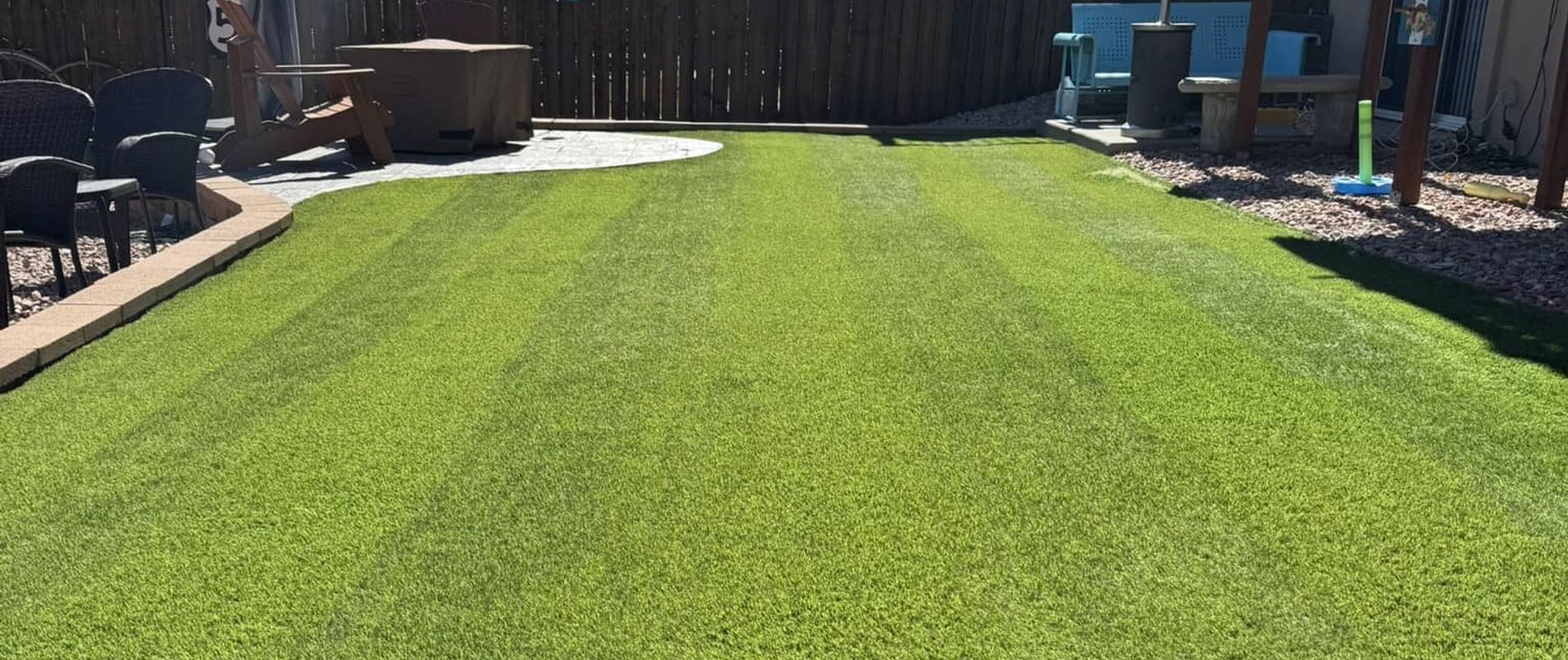
If your artificial turf has started looking flat and matted, you're not imagining it and you're not alone. It's one of the most common things we hear from homeowners here in Colorado Springs, and there's always a real reason it's happening. Once you understand what's actually going on under the surface, fixing it and keeping it from coming back makes a lot more sense.
At Peak Turf Solutions, we're professional artificial turf cleaners based right here in Colorado Springs. Here's a breakdown of what causes turf to go flat and what you can actually do about it.
Why Turf Goes Flat in the First Place
Artificial turf is made up of two main things working together: the synthetic fibers that make up the blades, and the infill material packed between them. The infill is what keeps the blades standing upright. When either of those systems gets compromised, the turf starts to lose its shape.
Foot traffic is the most common cause. Anywhere your dogs run the same route every day, where kids cut across the yard, or where you have a path between the back door and the gate, those fibers are getting compressed repeatedly in the same direction. Over time they stop bouncing back on their own. The blades get trained to lay flat, and that's what you start seeing.
Infill loss and compaction makes it worse. Infill isn't permanent. It migrates toward the edges of the yard, gets displaced by pets digging, washes out toward low drainage points, and compacts under repeated pressure. When the infill levels drop, the blades have nothing supporting them. They lay over instead of standing up, and no amount of brushing fixes it long-term without addressing the infill itself.
Colorado's freeze-thaw cycle does real damage. This is something we deal with here that people in warmer climates don't think about. Every time your turf freezes and thaws, the infill shifts. Blades that are pressed flat in winter don't always recover when temperatures come back up, especially if they've been that way for weeks. By the time spring arrives, some areas have been matted down for months and need more than just a warm day to recover.
Debris buildup compounds everything. Colorado Springs has no shortage of cottonwood fluff in the spring, pine needles year-round, and windblown dust and debris pretty much constantly. When that material settles into the turf and isn't cleared out regularly, it adds weight to the fibers, blocks airflow between the blades, and over time it keeps them from being able to stand back up on their own. It also accelerates infill compaction because it mixes in and adds to the density of what's sitting at the base of the fibers.
How to Tell Your Turf Needs Attention
Some of this is obvious, some of it isn't. The clearest signs are areas that look visibly matted, patches that feel hard or dense underfoot instead of soft, spots where the infill has clearly shifted to one side, and a general dull or flattened appearance across the whole surface. If your turf looked great when it was installed and doesn't anymore, it's almost always one of the above causes.
What Actually Fixes It
Brushing against the grain is the first thing to try on mildly flattened areas. A stiff-bristle broom worked against the natural direction of the fibers will lift a lot of blades back up. This works well for regular maintenance but won't fully solve it if the infill underneath is the real problem.
Replenishing the infill is what makes the biggest difference on turf that's been flat for a while. If the infill has compacted or migrated, brushing alone isn't going to keep those fibers standing up because there's nothing there to support them. Adding new infill and redistributing it evenly throughout the surface gives the blades back their structure. This is especially worth doing in spring after a Colorado winter, when snowmelt has had months to push things around.
Deep cleaning the surface removes the debris that's been weighing fibers down and contributing to compaction at the base. A proper professional cleaning gets into the infill layer, not just the surface, which is where most of the buildup actually lives. Once that material is extracted, the turf can breathe again and the fibers have a much easier time recovering their shape.
Professional power grooming is what we use on turf that's heavily matted or hasn't been maintained in a long time. The equipment lifts compacted fibers and breaks up dense infill in a way that a broom can't get close to. If you've got a section of turf that's been looking bad for an entire season, this is usually what it takes to get it back.
Keeping It From Happening Again
Most of this comes down to consistency. Brush the turf regularly, especially in high-traffic areas. Clear debris before it has a chance to settle in. Check infill levels in the spring once snowmelt is done, because that's when displacement is at its worst. And get a professional cleaning done at least once a year, twice if you have dogs or heavy use. Turf that gets regular attention stays upright a lot longer than turf that gets ignored until something is visibly wrong.
It's a low-maintenance surface, but it's not a no-maintenance surface, and the difference in how it looks over time is noticeable.
The Takeaway
Flat turf is almost always a sign of infill loss, fiber compression, or debris buildup, and in Colorado Springs the freeze-thaw cycle adds another layer to all of that. The good news is it's very fixable, and once you understand what's causing it you can stay ahead of it pretty easily.
Regular brushing, keeping infill levels maintained, and getting a deep clean done periodically goes a long way toward keeping your turf looking the way it did when it was first installed.
If your turf is looking flat and you're not sure where to start, reach out to Peak Turf Solutions and we can go from there.
Turf Looking Flat? Let's Bring It Back to Life.
Reach out to Peak Turf Solutions for professional artificial turf cleaning and grooming in Colorado Springs and we can go from there.
Call (719) 331-2305